In the evolving field of healthcare, the medical product design domain is undergoing a profound transformation, merging creativity with cutting-edge technology to redefine patient care standards. There has been a recent shift in designing medical solutions which incorporate user-centric principles, advanced materials, and state-of-the-art engineering.
This article delves into the innovations derived from an intensive live project conducted by third-year product design students in collaboration with ITERATE, a purpose-driven product design consultancy (ITERATE, 2024). From personalised devices to interconnected systems, this exploration unveils a variety of student projects driven by knowledge, compassion and the determination of enhancing the human experience in health and wellbeing.

Wearable Heart Monitor (ITERATE, 2024)
ITERATE UK
Based in Chepstow, ITERATE is a dynamic product design consultancy with a skilled team of designers and engineers. Together, they unite their efforts to transform imaginative ideas into reality. ITERATE has a notable presence in the medical field, contributing a range of incredible products including diagnostic, monitoring, preventative and curative devices. Their commitment to advancing medical innovation is evident in the diverse and impactful solutions they bring to life.
As part of their FemTech initiative, ITERATE introduced a groundbreaking product in response to women’s heart health concerns – a wearable heart monitor. Addressing the alarming misdiagnosis rates and challenges in symptom recognition for women experiencing heart problems, this innovative device records heart rhythm and blood oxygen levels, providing the user with consistent at-home monitoring.
The design process prioritised both user needs and aesthetics. Utilising PPG technology and an oximeter, the device ensures accurate heart rhythm and oxygen level monitoring, with the wrist identified as the ideal location for data collection.
The UWE Live Project:
In October 2023, as part of their studio design module, product design students at UWE were briefed on a collaborative three-week intensive healthcare project with ITERATE:
How might we provide relevant and accurate health information in a way which supports the active management of personal wellbeing and/or medical conditions?
Heart 2 Heart
Heart 2 Heart: Embracing Safe Sleep Solutions Inspired by Ancient Practice
Group members: Charlie Webber, Sophia Shin, Gabriel Prasal, Ralitsa Fileva, Ching Lam, Jack Sampson | Third Year Product Design, UWE
The Problem:
This group undertook the challenge of mitigating the risks associated with Sudden Infant Death Syndrome (SIDS), a phenomenon where healthy infants tragically pass away during sleep due to blocked airways. Recognising the difficulty in predicting SIDS and the potential dangers of infants rolling onto their stomachs, the team aimed to find a solution that doesn’t involve placing objects in the crib, a practice discouraged to prevent SIDS.
Product Solution:
The collaboration of this group’s efforts resulted in the development of Heart 2 Heart, a revolutionary product designed to simulate the comforting aspects of co-sleeping without the associated risks.
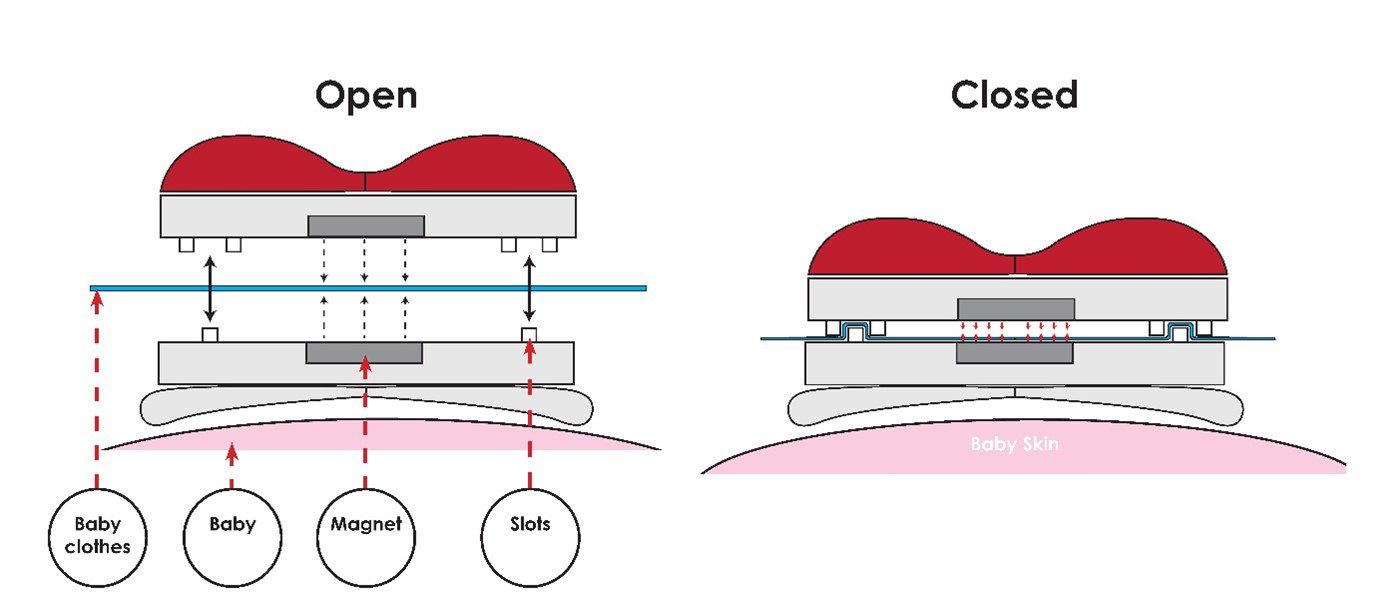
Comprising a weighted object attached to the baby’s pyjamas, it emulates the pressure experienced during co-sleeping on a mother’s chest. The device vibrates with the mothers’ rhythmic heartbeat, preventing the infant from rolling over and inducing a calming effect to reduce the risk of SIDS.
In addition to this, the mother has a small pin which she can press at night to feel the baby’s heartrate to calm her down in case she wakes up in the middle of the night. This innovative solution offers a modern twist on ancient practices, providing parents with a secure and soothing option for their infant’s sleep environment.

Illustration of parent wearable device
Active Life: Creating a Holistic Approach to Weight Management
Group members: Moin Mulla, Zahraa Umer, Duru Oktem, Scott Roberts | Third Year Product Design, UWE
The Problem:
This project specifically targeted individuals with a higher BMI, aiming to inspire them towards a more active lifestyle while promoting the motto ‘anything is better than nothing’. Acknowledging the excess weight placed on the knees, the team set out to create a solution that would not only encourage physical activity but also offer insights into the user’s well-being.
Recognising the potential health risks associated with excess weight, including elevated cortisol levels, the challenge was to design a product that addressed these concerns in a holistic and user-friendly manner.
Product Solution:
To address this challenge, the team devised a tailored solution: a knee brace designed with a strategically positioned pulse monitor behind the popliteal pulse. This design ensures a strong and reliable signal for precise and effective monitoring.
Additionally, a sweat sensor was integrated to measure cortisol levels, offering valuable insights into the user’s stress levels. These data points were fed into a user-friendly app designed to analyse trends. The app’s unique approach focused on delivering qualitative feedback to encourage users without fostering an unhealthy obsession with numbers. This holistic solution not only promotes physical activity but also enhances the overall well-being of individuals with a higher BMI.

Flush: Targeting Menopausal Symptoms and Building Community Support
Group members: Naomi Adams, Holly Grange, Luke Hulbert, Aaron Read, George Cetnik, Hannah Burnett | Third Year Product Design, UWE
The Problem:
This project centred around addressing the challenges faced by women undergoing menopause, specifically the disruptive symptoms like hot flushes. Surveys uncovered a prevalent issue in women enduring restless nights due to these discomforting episodes.
Recognising the need for a solution that promotes better sleep and overall well-being during menopause, the team set out to develop a product that offered not only relief from hot flushes but also a sense of community for women navigating this transitional phase.
Product Solution:
In response to these challenges, the team introduced “Flush,” a silk headband designed to detect elevated surface skin temperature, a precursor to hot flushes. Utilising advanced thermoelectric technology, the headband automatically cools the skin, providing instant relief.
Complementing this, an innovative app was developed to foster a sense of community among women experiencing menopausal symptoms. This app not only serves as a platform for sharing experiences but also allows users to track and manage their symptoms effectively, creating a supportive environment for women during their menopausal stages of life.

Flush Headband | Photographed by: Aaron Read

Flush Headband | Photographed by: Aaron Read
Empowering Tomorrow
These projects highlight the potential for technology not only to address physical challenges but also to foster a sense of support, understanding and empowerment in the face of unique health challenges. The future of medical product design promises advancement marked by even greater integration of cutting-edge technologies, personalised solutions and a heightened emphasis on user-centric design.

Photo credit: Holly Grange | Third Year Product Design
Written by: Hannah Burnett